An atlas for the days you’ll remember.
Some projects begin with a market brief. This one began with the ocean—and the wish for a better way to decide where to meet it.
PureSurfers gathers California surf spots, forecast guidance, tides, wind and public camera links into a distinctive map experience. Its purpose is practical: help a surfer understand the coast and choose a session. Its visual ambition is equally deliberate: make exploration feel worth returning to.
It is a current expression of ArtScientific’s multidisciplinary practice, established in 1994. The work connects art direction, information design, software and systems instead of handing each discipline a finished problem from the one before it.
An instrument with a sense of discovery.
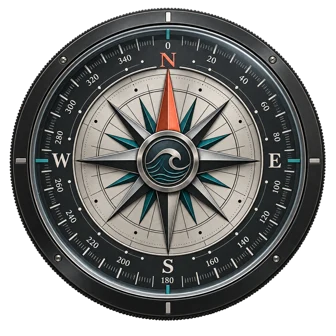
The compass, contour lines, large typography and restrained coral accents give the atlas a recognizable character. Different map themes offer different ways to read the coast. Shared typographic and structural rules keep individual spot pages part of the same world.
Beauty that helps you look
Hierarchy, contrast and grouping are functional choices. They make a dense collection of conditions easier to scan and encourage the next useful question.
Authenticity that earns attention
A compelling image of the wrong beach is still the wrong image. Location-accurate satellite placeholders were chosen when authentic spot photography was not available.
The character of the work comes from caring about both the number and the way someone encounters it.
An independent studio can attempt more.
AI has become a powerful collaborator in the making: helping investigate data, develop code, explore alternatives, find faults and produce supporting material. It allows a single developer to move across more of the work needed to bring a complex product into public use.
That matters in a category occupied by a corporate incumbent such as Surfline, whose history begins in the 1980s. PureSurfers is an independent attempt to offer a different experience: California-focused, map-led and shaped by a surfer’s practical questions.
The years of design practice and time in the water still matter. They determine what to ask, what to reject and what a useful result should feel like. AI gives that accumulated experience more room to act.
The coast keeps the project honest.
Every adjustment meets an external reality: the beach, the tide, the incoming swell and the people who use the product. A beautiful interface cannot make a mistaken estimate true. An accurate input cannot help much if its meaning is buried.
PureSurfers continues to develop through that conversation between observation and implementation. The live atlas, individual spot pages, surf-camera directory and embeddable widgets are parts of one effort to make surf information more accessible and enjoyable.
For ArtScientific, the project belongs to a longer thread: follow a meaningful problem across disciplinary borders, then make the result useful enough to live beyond the experiment.
An independently developed studio project, live and evolving. The case study describes the work and its method, not a claim of market leadership or independently measured forecast superiority.